EPISODE 6
Bach, Community, the International Pride Orchestra
with Michael Roest
founder & director, International Pride Orchestra
former Associate Dean of Academic Affairs, San Francisco Conservatory of Music
Nicholas Phan sits down with Michael Roest — former Associate Dean of Academic Affairs at the San Francisco Conservatory of Music and founder of the International Pride Orchestra — to explore what Bach's music has to do with identity, community, and belonging.
Michael shares how music became foundational to his life from fifth grade in Kenosha, Wisconsin, through Oberlin and Juilliard — and how that sense of belonging through music eventually led him to create the IPO, a global ensemble bringing together LGBTQ+ musicians to perform, commission new works, and celebrate queer artistry on a world stage.
Along the way, they dig into what makes Bach's music so singularly adaptable — why it can be played on practically any instrument, why it keeps sounding fresh no matter how many times you've heard the Cello Suites, and why Bach might just be the rare composer who doesn't over-notate, even with so many notes on the page.
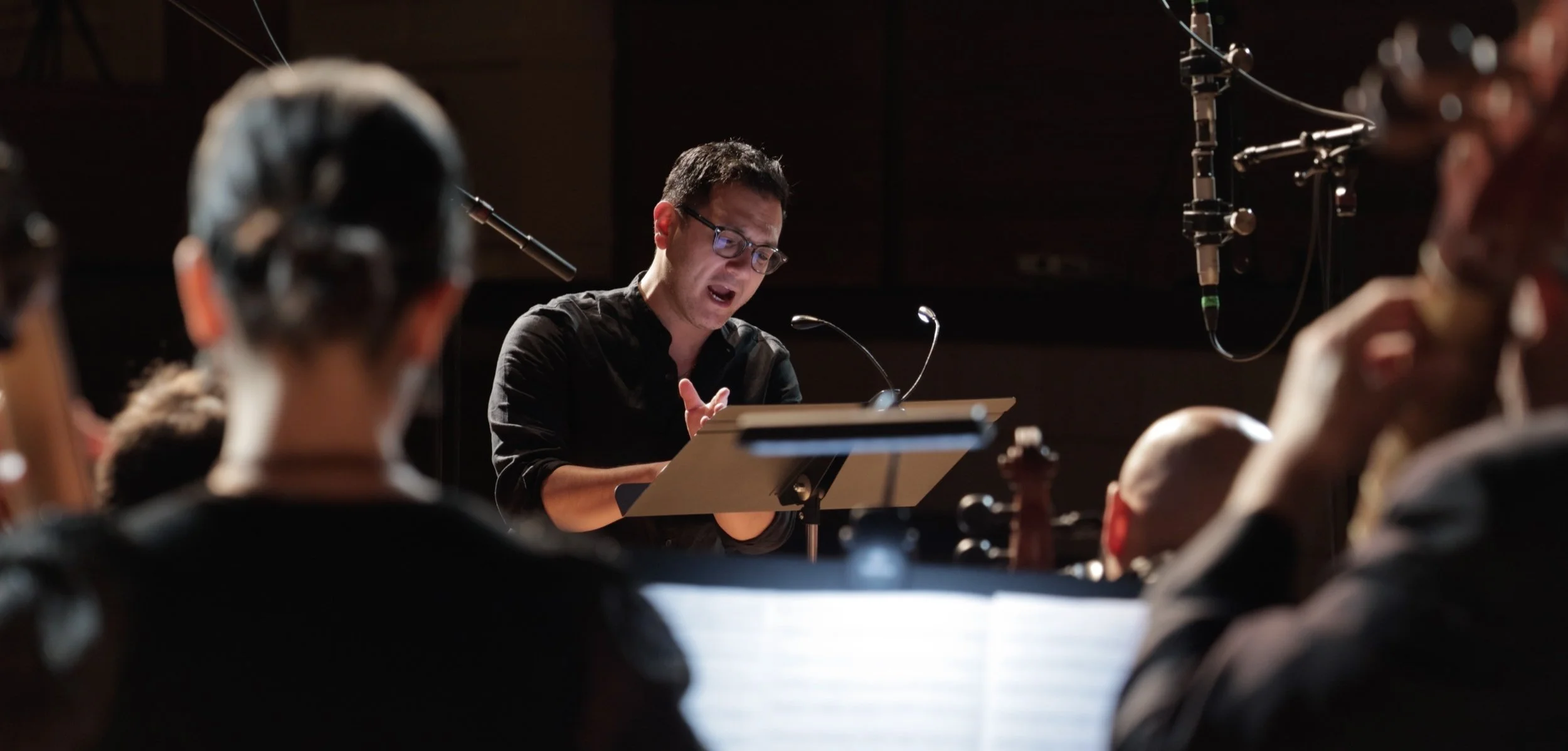
The episode closes with an aria from Cantata 90 — a terrifying, virtuosic tenor piece about the end of times, filmed with the SFCM Baroque Ensemble.
ARIA
Es reißet euch ein schrecklich' Ende from Es reißet euch ein schrecklich' Ende, BWV 90
PERFORMERS
SFCM Baroque Ensemble | Elisabeth Reed & Corey Jamason, directors
Violin 1: Carla Moore (leader), Alexandra Santon, Cynthia Black, Eliana Estrada
Violin 2: Pauline Kempf, Annemarie Schubert, Luke Chiang
Viola: Jennifer Redondas, Caitlin Keen
Cello: Octavio Mujica, Hasan Abualhaj
Bass: Farley Pearce
Organ: Yunyi Ji
SOUND (BWV 90 only): Chanho Han & Jason O'Connell | VIDEO (BWV 90 only): Clubsoda Productions with Edgar Garcia assisting | VIDEO (Interview): Nicholas Phan
This episode was filmed in partnership with the San Francisco Conservatory of Music.
This project is a fiscally sponsored project of FRACTURED ATLAS.
To find our more information and to make a TAX-DEDUCTIBLE donation to support the continuation of this project please click the button below
TRANSCRIPT
[00:00:00] STUDENT 1: And then like when you play the violin, you can't escape Bach, right? You play as little concertos.
[00:00:05] STUDENT 2: Two movements of Bach is always required in auditions, and I feel like students nowadays just learn Bach for that requirement and they don't find this passion within it to perform it
[00:00:17] STUDENT 3: with piano. Like all the time, like since you start with the, uh, Anna Magdalena book and then you have the inventions and then you have everything.
[00:00:27] And then you play the double bass. You have Al again, the Ana Magdalena, and then you have the sweets.
[00:00:34] STUDENT 1: So I was in the Suzuki method for a little while and I had no experience with it until the B. Double concerto. And to be completely honest, you know, you said that, you know, when you got to the Bach double concerto and stuff, you like, you got so excited about the music and stuff, but I, I didn't really, I didn't really,
[00:00:48] STUDENT 2: I had that same attitude about Bach.
[00:00:51] And then I joined the historical performance department here at SFCM. And I remember taking out my broke fiddle for the first time and deciding to play the first movement of box Sonata number one. And I just fell in love with the sound, the, the, not only the instrument was making, but the, I could hear the chords on a deeper level and I just started playing through them.
[00:01:21] I remember I was in the practice room for hours, just going through all of the Bach, and I was having so much fun. I've never had so much fun in my life.
[00:01:34] PHAN: Hi. I am Nicholas Phan, and this is Bach 52.
[00:01:43] On this episode of Bach 52, I had a great chat with Michael Roest, associate Dean of Academic Affairs for the San Francisco Conservatory of Music, and the founder and director of the International Pride or. The International Pride Orchestra is a nonprofit institution that brings together lgbtq plus musicians from around the world to present concerts, celebrate community, and raise funds for lgbtq plus causes.
[00:02:10] IPO had its debut in June of 2023 in San Francisco. The heart of the Gay Rights Movement. IPO proudly partnered with legendary Drag Performer Peaches, Christ and the Sisters of Perpetual Indulgence to raise funds to support Lyric one of the first and largest L-G-B-T-Q-Q Youth centers in the United States.
[00:02:30] The orchestra will reunite for its second concert during Pride in New York City in 2024 if you'd like to be. A member of the International Pride Orchestra in June of 2024. You can apply now at their website, international pride orchestra.org. Mike and I talked about how box music is unique in the sense that his music is adaptable and sounds great on multiple, multiple instruments, and as a result makes it really special and valuable as a tool for teaching.
[00:03:04] He also talked about how music. And especially classical music was foundational in his own life journey and his own education and how music provided him with a sense of community and a sense of belonging. And that aspect of his life journey is what inspired him to create the International Pride Orchestra.
[00:03:26] It was also special to be able to talk with Mike and his position. As a representative from the San Francisco Conservatory of Music, with whom I have partnered to film many of these arias for Bach 52. The Aria at the end of today's episode is taken from Tata 90, and it was filmed at the conservatory with the SFCM Baroque Ensemble, which is an ensemble comprised of current students studying historical performance as well as a few alums and the faculty who mentor those students.
[00:03:59] This project is about Bach, Johan, Sebastian. To be specific, there are a lot of them, right? And the base question we're kind of asking everybody is, do you think the music of Bach is for everybody? But before we get there, I. Why don't we start with, you know, how did you get started in music and, you know, how has box music factored into your life?
[00:04:22] ROEST: Well, I started in music like many young wind and brass players in fifth grade. We were really fortunate to have a great music program in Wisconsin. So I'm from Kenosha, Wisconsin. And it was just a band director who came into our classroom, played a little music on a euphonium, and was obsessed with it. A whole new world was in fact the, uh, first thing that I heard.
[00:04:50] PHAN: Like the Disney
[00:04:51] ROEST: tune. The Disney tune, uh, that, uh, really set me on the path. And that's how I got started. Started playing in band and. I have really enjoyed just every aspect of music. Ever since then, it's just been incredible. I started on baritone and eventually played the tuba and went to school for that, uh, both Oberlin and Julliard.
[00:05:16] PHAN: And how old were you when you started?
[00:05:18] ROEST: Uh, so fifth grade, I was, you know, what is that,
[00:05:23] PHAN: like 10,
[00:05:24] ROEST: 10, 11, something like that.
[00:05:26] PHAN: And immediately in a band situation or just private lessons?
[00:05:29] ROEST: So in our school, they gave us free private lessons and an instrument every week for multiple years. We had practice rooms, we also had band.
[00:05:37] And right from the very beginning we were developing those ensemble skills. And in the summer we would even have marching band and concert band music right from fifth grade.
[00:05:49] PHAN: So from a whole new world to Bach, when did Bach come into the picture after?
[00:05:55] ROEST: I don't remember specifically my first interaction with Bach, but what I do remember is that Bach's always been a part of my training in some way, shape, or form.
[00:06:05] Uh, whether it's the first little tunes that we play in the beginning, music books that we learn, things from Anna Magdalena, things from his Bach corrals as a brass player. Oh my gosh. The number of times I've, I've played Bach corrals, both for the sake of enjoying the harmonies and the music, but also for, uh, exercising and practicing things like balance blend sound, intonation, things like that.
[00:06:34] So he's been. I think in my life, ever since the very beginning, whether I knew it or not,
[00:06:39] PHAN: so interesting. I was reading last night actually about just music education in that region of Germany during his lifetime when even he was a kid and part singing and you know, music was. Central to their education from about that age, maybe even younger.
[00:06:57] And it was a huge part of their education 'cause it was how they got people to memorize catechism. And you know, Luther was really big on incorporating religion into the education. And so music with this integral part of it. But it's interesting that you had that opportunity to have music be a part of your education from so young.
[00:07:15] I mean, that's not a normal thing anymore, is it?
[00:07:19] ROEST: No. A lot of school systems have pushed. Um, starting music much later for budget reasons and things like that. They've also moved away from starting students on instruments, in private lessons, one-on-one instruction, right from the very beginning. Also budget reasons.
[00:07:37] They've done a lot more, uh, group instruction, which can be effective. But you and I both know that important relationship, that one-on-one kind of instruction and individualized instruction is really key to growth from a very young age. So I was very fortunate. I don't know that, that students have access to the same level of care and instruction that I had when I first started
[00:08:00] PHAN: as Dean of Academic Affairs.
[00:08:03] You know, you're overseeing a curriculum now at the conservatory level, so that's university level and beyond, I would imagine, right?
[00:08:10] ROEST: Yes.
[00:08:11] PHAN: And so how do you feel about Box Place in that curriculum? Do you feel like it's central? Do you feel like it's necessary? Do you feel like it's not necessary?
[00:08:20] ROEST: I think it's absolutely necessary to have an understanding of where a lot of our music has grown from.
[00:08:28] At least in the Western classical music tradition. So much has been developed from the work that Bach has given us, whether it be a. Just understanding tonal harmony or counterpoint. I mean, every major European composer was really teasing out a, a lot of that stuff in their compositions. He's played a major role, I think in, in, in Western classical music.
[00:08:54] So as a conservatory, yes, of course. I, I do think that a, a student should be well versed in. Uh, music of of Bach. I think it teaches quite a bit. Should it be the only thing? No, absolutely not. And I, I, I really think that conservatories of music, while they do need to look back, but they, they also maybe even more so look forward, how are we going to shape and change music?
[00:09:20] How is the next generation of young musicians going to. You know, influence the world with music. And so with our curriculum at the San Francisco Conservatory Music, yes, we do have a lot of core courses that do dig into the pasts and really try to understand where things developed and how they developed.
[00:09:43] But we also place a really big emphasis on how we're looking forward and making sure that. We get to back to a place where music isn't just about, uh, and music education isn't just about execution at the highest level, that it is about creation, that it is about improvisation. And Bach, as many know, was a brilliant improviser and incredible composer and incredible performer.
[00:10:13] And so in at SFCM, we are certainly looking at how do we make sure that our curriculum is reflecting that vision of what it means to be an artist, a creator, and performer, and. It's an interesting thing, you know, improvisation to build that into a, a, a pretty traditional concept of, of music education.
[00:10:40] PHAN: It's interesting because, you know, people use these terms like entrepreneurship and creator and, you know.
[00:10:46] ROEST: Mm-hmm.
[00:10:47] PHAN: You know, now we're using things like influencer, like becoming a music influencer by creating your content or whatever.
[00:10:53] MUSIC: Mm-hmm.
[00:10:53] PHAN: But it's, to me, it just feels a little bit like what was old as a new, you know, these composers were all.
[00:11:00] Working really hard to promote themselves and promote their work. It's not like they just wrote it and suddenly it was like, in this majestic cannon, you know? Yeah. And so I, I'm always a little fascinated by it because the conversation and the dialogue around this kind of aspect of music education, people talk about it as if they're inventing it for the first time in a way, and
[00:11:22] ROEST: they're not
[00:11:23] PHAN: right.
[00:11:23] ROEST: But, but, uh, you know, so much of the pedagogy was really focused on how do we make someone play. You know, the x, Y, z piano concerto, the best. It was not about what are you going to create? How, what are you going to make? So I, I think in a lot of ways, we're starting to return a little bit back to, uh, a, a, a place where folks are really empowered to just experiment, makes 'em sound.
[00:11:49] Yeah. And you know, they have a, a really long history of things that they can draw on for influence, which in some ways makes it a little harder.
[00:12:01] PHAN: Yeah. I mean, 'cause there's a lot of voices from the past you have to contend with.
[00:12:05] ROEST: Yeah.
[00:12:05] PHAN: But I mean, I'm sure even Bach felt that way in some ways.
[00:12:09] ROEST: Mm-hmm.
[00:12:10] PHAN: Either that or he just really didn't.
[00:12:11] Give a shit. Can I say that on my interview?
[00:12:15] ROEST: Maybe? I think so. We'll have to beep that out.
[00:12:18] PHAN: I don't know. You obviously got passionate about music really young. I mean, do you feel like it, you know, what purposes does it serve in your life beyond just like music is cool?
[00:12:32] ROEST: That's a deep question. Uh, and for everyone, I think they'll have maybe slightly different answers, but for me it's about community.
[00:12:40] Uh, about having a shared experience with people. There is nothing, in my opinion, more powerful than enjoying a concert with somebody that shared feeling. The fact that you are transported, you have this moment where. You are very present and you are sharing that with another person. And that may be as an audience member, it may be as a performer.
[00:13:08] It could be, you know, as a conductor, it could be, you know, listening to music on your iPhone, you know, whatever it may be. And for me, music has really been important for developing friendships and relationships and defining, you know, who I am, which is one of the reasons why. Uh, I'm actually the founder and director of the International Pride Orchestra and we, it's an organization that will have its debut this June, 2023 here in San Francisco, and it really is about bringing people to together.
[00:13:45] The LGBTQ plus community from all over the world to perform together, to build community that identity, to celebrate, uh, queer artists, to commission new works, and to really bring voice to the LGBTQ community in a global stage. So that's how I have connected with music. That's how I choose to enjoy music.
[00:14:11] And I think everyone's gonna have slightly different response to that. But that's kind of where I come from.
[00:14:17] PHAN: No, I mean, I share that It's uh, I often tell people that music is what's saved my life many times it's saved me from self-harm many times because, especially as a teenager getting passionate about music and being, you know.
[00:14:31] Grappling with coming out of the closet and being a gay person, like mm-hmm. You know, that's a really hard time. And music was always this place where I had community, I had friends. It's where I found myself. It's where I found other people, you know? So I think it's really exciting what you've got planned.
[00:14:45] ROEST: Yeah. I mean, uh, what you just said just resonates so much with me. It's funny, I, I went back home and pulled out my memory box and in that memory box I have all my report cards from like. Kindergarten all the way through and I was looking at them and you know, all of my report cards up until about fourth and fifth grade were pretty strong in art, but pretty low in reading math and science.
[00:15:09] And all of my teacher says, what a wonderful kid. What a nice kid you try so hard doing really great. Still a little bit behind on these things. I started music in fifth grade, straight A's from that point forward. Wow. And I, you know, I can't say that that. I, I can't definitively draw that line, but when I look at it, it's quite clear that something in my brain clicked when music stepped into my life in a major way.
[00:15:37] And I started having the opportunity to succeed and have confidence in something and really in, uh. Kind of engage my brain in a way that somehow worked for me. And that really started to build confidence for me in setting a stage for developing those relationships and friendships. And for me, as a gay person in the nineties in Wisconsin, music for me was the thing that I had to turn to and the friendships that I built around that was really important.
[00:16:11] And it. Saved me. Like you, like you say, and I've been very fortunate to have a number of, uh, folks in my life really support me, you know? And I live in an incredible community here in San Francisco.
[00:16:25] PHAN: I think this is the thing that's fascinating me about box music in particular, is that he's so central to our classical music canon, you know?
[00:16:32] And I mean, he really is central to music education in terms of the things you're talking about, in terms of studying counterpoint and harmony. And, but it's. Interesting. He was a church musician and he was writing most of this music for fifth graders who were singing in the local choir. And, you know, the amazing instrumentalists who happened to, I don't know how he find these people in the hinterlands of Germany to write all this music, but it, you know, he was a, he was providing a community service with his music, but also tied with that community service was this.
[00:17:06] Highly religious, dogmatic aspect of it all, and that's the thing that I'm really kind of curious about and curious to hear other people's perspectives on it. And I guess, I mean, maybe as a, you know, instrumentalist, you don't necessarily grapple with that as much. I mean, do you find that the religiosity in his music kind of comes forward or for you or not really?
[00:17:29] ROEST: It depends on what music. So my introduction to Bach and, and actually a lot of my work in Bach has been mostly around his instrumental stuff. You know, as aist, I learned his cello suites, his flute, sonatas, uh, we played some of the Bach corrals, but of course, you know, they're not, the text is not right below it when we're playing.
[00:17:51] So actually a lot of my. Engagement with Bach as an instrumentalist was a lot more around kind of the secular, uh, part of it. But, you know, you get into start, start getting the cantatas and things like that and the texts, they, you know, there's a very deep religious tradition there. I was raised Catholic and so.
[00:18:16] Uh, music was a, certainly a part of my life and service growing up, but I personally, the, the religious stuff does not resonate with me. I have my own issues with the church, right? So I kind of separate the two. I can enjoy box music for what it is. I don't really get all that interested or invested in the stories behind it, frankly.
[00:18:40] PHAN: Right. And then I'm just shouting at you in German, so like, yeah. You don't understand it. Anyway, I get it. It's
[00:18:43] ROEST: pretty though.
[00:18:45] PHAN: Thanks. Do you have any final thoughts you wanna share about Bach, about music, about the Pride orchestra, about the conservatory?
[00:18:57] ROEST: You know, you asked this question of is Bach for everyone?
[00:19:01] I think it can be. Does it need to be? Probably not. But the one thing that I've really found consistent. At least within Box Instrumental works is that it offers so much opportunity for the individual artists to express themselves and have their unique ideas and opinions. I've heard the cello suites about a million times, as we all probably have.
[00:19:28] They somehow never get old because every single time you listen to them, there's just so much opportunity for you to. Add your own flavor and stamp on, on the music. There's something very special about that. Uh, you know, there aren't too many composers whose music you can do that to. There are of course, traditions, but with Bach, uh, I feel like people are really willing to kind of try different things out on his music.
[00:20:02] And so I think it does keep it really fresh and in that part, in that particular instance, I do think it can be for everyone. It really opens the door for just a lot of different voices.
[00:20:15] PHAN: It's interesting. It's. Yeah, I was talking with someone earlier today and they were saying, you know, oh, Bach, it's like almost impossible to sing, or it's almost impossible to play.
[00:20:23] Like he doesn't care about singers in particular.
[00:20:25] ROEST: Oh, the instrumentalists too. I mean, you look at it and you're like, these are straight 16th notes for four pages. How, how am I supposed to breathe? Or how am I supposed to do this?
[00:20:33] PHAN: And, you know, I, I said to this person, you know, it's actually not impossible.
[00:20:37] Like he really knows what you're capable of and he also knows how to push your limits. And he's one of those very, very few composers that. Is pushes the boundaries of the capabilities of the instrument, whatever it is, because he knows just how far he can go to push you past your comfort level, and in that way, he's a really great teacher.
[00:20:57] It's so interesting to hear you say like, there's so many opportunities to put your stamp on it, because in some ways I sort of look at it as he's so great at bringing out your individual voice because he's so demanding of you as a composer.
[00:21:10] ROEST: Hmm.
[00:21:10] PHAN: And as a result, there are all these different layers. You can po you can explore and maybe you're in a time in your life where suddenly those 16th notes resonate in a different way.
[00:21:20] But there's enough richness there that, again, there's just endless variety, but it's, oh, it's an interesting perspective. I hadn't thought about it that way until just now. Like this idea that he's able to like pull your voice out from you in whatever given moment it is. And it's an individual thing because that's why Glenn Gould sounds one way and Jeremy Danks sounds another way.
[00:21:41] And you know, yo-yo Ma sounds one way and El Wier Stone.
[00:21:45] ROEST: Steven Isli or Exactly. You know, and you know, we did this, uh, workshop, um, last year with the Amateur Music network. Where we brought in six individual artists each to present one of box cello suites and to perform some of the movements and then discuss what, how they're approaching this.
[00:22:08] And it's so funny, each artist was very clear that like, I can't tell you how to play this. Because even for them at different stages in their life, they have had a totally different interpretation or approach to how they may perform that, whether it be on a period instrument or not, whether it be in a large space, small space, intimate space, thousands of people watching how they're feeling that day.
[00:22:37] Yeah, it's, it offers a lot of flexibility and he doesn't over notate.
[00:22:42] PHAN: Which is a strange thing to say 'cause there's so many notes.
[00:22:45] ROEST: There are so many notes.
[00:22:48] PHAN: But you're right, he's extremely efficient.
[00:22:50] ROEST: Yeah. I mean, you, on the very opposite side of that is, you know, a composer like me all know Mahler, who wrote a paragraph for practically every single note.
[00:22:58] Yeah. It's, it's a very different, different approach. And that's what I like about his music. There's, there's, even though all the notes are on the page, there's still that element of improvisation baked into it.
[00:23:08] PHAN: Right. Why should people listen to box music?
[00:23:12] ROEST: Well, uh, I don't, I don't know if I want to answer that question.
[00:23:16] That's a hard one to answer, but what to, what would inspire someone to listen to his music or, or how to listen to his music? Great music does not need an instruction manual, and all music is going to connect with people differently at different stages in their life. There are days when I wanna listen to the second suite.
[00:23:43] There are days where I wanna listen to, you know, a B minor mass. I would have a hard time mandating some to somebody that they either should or shouldn't listen to something or how to listen to something. I think everyone experiences music in their own way, and of course the more you learn about music, the.
[00:24:08] The more, perhaps you can develop some different ideas and imagine things differently. If you were to perform, uh, music, you can have a slightly different dialogue with it, but I, I think all music has that potential to be great and for anybody in every, I I, I don't think it, it should be limiting. In that sense.
[00:24:32] PHAN: Well, I think it's an interesting thing you say too, about being in dialogue with it. It's a being a listener. There's something that is implied about passivity with it, like you're supposed to receive it. And there's something about the way that we have treated classical music over the last so many decades as something that's good for you, and it's like the fiber in your.
[00:24:56] Cultural life that is going to keep you regular or whatever, and it's good for your heart health. Uh, and it's been kind of sold that way a little bit, and I feel like Bach is sold that way sometimes, and there's something implied with that. It's like, it's good for you, so just receive it.
[00:25:12] ROEST: Mm.
[00:25:12] PHAN: Whereas like being in dialogue as a listener, you know, that's, that's really the key.
[00:25:19] Music is there to move us.
[00:25:21] ROEST: Mm-hmm.
[00:25:22] PHAN: You know, there's a whole reason why, you know, the Luther didn't need Bach. Mm-hmm. There was a whole debate as to whether music was necessary in the church at that time anyway, or appropriate for that matter, particularly Instru instrumental music. And so there's something about music that elicits a response from us, and it's about paying attention to those responses for me.
[00:25:46] And there's something really provocative about box music, and so either you might hate it, but. You're certainly not gonna feel milk toast about it.
[00:25:57] ROEST: You know, it would be, it's, it's hard for me to, to step away from Bach. It's hard for me to have an objective view of Bach, you know? Have you ever tried to listen to someone speak English, but as if you've never spoken English before?
[00:26:14] Hmm. Right is trying to just hear the natural sounds just of the language without understanding that there's meaning. And because I started music when I did within the community that I did and with the music books that I did, uh, Bach for me is like an English language to a certain degree. And it's hard for me to not be in dialogue with that music and already have an understanding of what some of the.
[00:26:45] Uh, the harmonies and the rhythms and, and whatever it may be, uh, might be suggesting. And so I think it would be really fascinating to be able to kind of erase that part of my memory somehow, to have a real fresh perspective of what this music sounds like. It would be really interesting. I, I have no idea, but I do like, I do like your concept of being in dialogue.
[00:27:11] Uh,
[00:27:11] PHAN: that was your concept, to be clear.
[00:27:13] ROEST: Oh, wow.
[00:27:20] PHAN: The aria for this week's episode is taken from Cantata 90, which was composed for the 25th Sunday after Trinity, which takes place around mid-November every year. In case you're not familiar, the Bible reading for that Sunday is taken from the gospel. According to St. Matthew and describes the tribulation, which is a sign that the end of times is coming.
[00:27:43] The aria is composed for full strings and continuo and tenor, and it's a terrifying piece of music. Virtuosic filled with scales that go up to high, a's in the tenor part. Fast notes through the violins, fast notes even in the baseline, that almost sound like an earthquake. It's a terrifying piece of music.
[00:28:05] The translation of the aria is a horrible end is coming for you. You sinful critics. The measure of your sins is fully told, yet your minds completely hardened. Have totally forgotten your judge. Hope you enjoy this aria from Cantata 90 as a horrible end is coming for you.